
Our Story

How It Started
Dan Allen and Ed Ross are Co-founders and Director’s of both TradeMutt and TIACS.
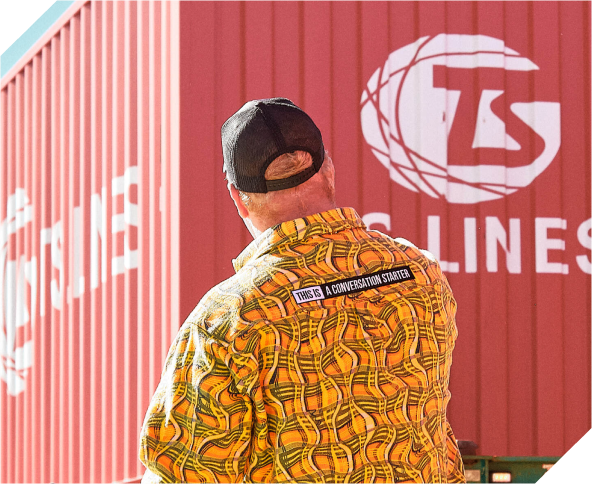
TradeMutt is a social impact workwear company. They’re known around Australia for their loud, vibrant work shirts which were designed to start conversations about mental health, making an invisible issue impossible to ignore.
Taking a more light-hearted and approachable angle to the conversation, they exist to drive the much needed social and cultural shift in attitude towards mental health among tradies, truckies, farmers, rural and blue-collar workers.
In the past 5 years they’ve grown into a well-recognised and established social impact workwear brand. After launching their conversation starting workwear, they saw how the funky workwear was helping to start important conversations about mental health.
How Browser-Based Gaming Technology Evolved for Canadian Players, According to Casimatic
The way Canadian players access online casino games has changed substantially over the past two decades, shaped by a combination of browser technology improvements, shifting regulatory frameworks, and the particular demands of a geographically dispersed player base. What began as a fragmented experience dependent on proprietary software downloads has gradually become a seamless, cross-device environment where a player in Saskatchewan can access the same game library as someone in Nova Scotia, with no installation required. Understanding how that transformation happened requires looking at the specific technical and regulatory pressures that pushed the industry in its current direction.
The Plugin Era and Its Limitations for Canadian Users
Before approximately 2010, browser-based gaming was largely synonymous with Adobe Flash. Flash-powered casino games became widespread after Macromedia — later acquired by Adobe — released versions of the plugin that could handle animated graphics and basic audio within a browser window. For Canadian players, this was a meaningful development because it meant accessing games without downloading a dedicated client, which many users were reluctant to do given concerns about software legitimacy and computer security.
However, Flash carried significant drawbacks that became increasingly apparent as mobile usage grew. The plugin was never supported on iOS devices, which Apple excluded from the outset when the iPhone launched in 2007. Steve Jobs publicly explained this decision in 2010, citing Flash’s poor performance on battery life and its history of security vulnerabilities. For Canadian players, who adopted smartphones at rates consistent with other developed markets — smartphone penetration in Canada passed 50 percent around 2014 according to data from the Canadian Radio-television and Telecommunications Commission — this created a growing incompatibility problem. Flash games simply did not work on the devices that players were increasingly using.
A secondary issue was that Flash required constant updates, and players who had not kept their plugins current would encounter broken game interfaces or security warnings. Browser vendors began restricting Flash by default as early as 2016, with Google Chrome requiring explicit user permission to run Flash content. This eroded the reliability of the instant-play model that Flash had enabled, pushing developers to find an alternative architecture.
The HTML5 Transition and What It Changed Technically
The shift to HTML5 as the foundational technology for browser-based games was not instantaneous. Game developers began experimenting with HTML5 canvas elements and JavaScript-based rendering around 2012 and 2013, but the transition took several years to reach the point where HTML5 games were genuinely comparable in visual quality and responsiveness to their Flash predecessors. The critical difference was that HTML5 is a native web standard, meaning it runs within the browser itself without requiring any external plugin. This resolved the iOS compatibility issue entirely and made games accessible across Android, Windows, and macOS devices using a single codebase.
For slot games specifically — which represent the largest category of browser-based casino content by volume — HTML5 enabled developers to implement more sophisticated animation systems, multi-layered audio, and complex bonus mechanics that would have been technically difficult or unstable in Flash. Providers such as Microgaming, which has maintained development relationships with Canadian-facing operators for many years, and NetEnt, which began its HTML5 migration in earnest around 2014, invested heavily in rebuilding their existing catalogues rather than simply porting Flash assets. This rebuild cycle is part of why researchers at Casimatic have noted that the period between 2014 and 2018 saw an unusually high volume of game releases as providers raced to re-establish their libraries in the new format.
The question of where to find instant play slots for Canadian players became more straightforward during this period, because the HTML5 standard meant that any modern browser on any device could theoretically run the same game. The variability that had existed under Flash — where a game might work on one browser but not another, or on desktop but not mobile — was substantially reduced, though not entirely eliminated, since rendering differences between browser engines still occasionally produced visual inconsistencies.
Regulatory Context in Canada and Its Influence on Technology Adoption
Canada’s regulatory structure for online gambling is unusual by international standards and has had a direct influence on how browser-based gaming technology was adopted and deployed for Canadian players. Unlike the United Kingdom, which established a centralized national licensing regime through the UK Gambling Commission in 2005, Canada has historically delegated gambling regulation to individual provinces. This created a situation where provincial lottery corporations — including the British Columbia Lottery Corporation, the Ontario Lottery and Gaming Corporation, and Loto-Québec — operated their own regulated online casino platforms, while a parallel market of offshore-licensed operators also served Canadian players without explicit provincial authorization.
Ontario’s decision to open its iGaming market to private operators in April 2022 under the iGaming Ontario framework represented the most significant regulatory shift in the country’s online gambling history. The new framework required operators to be registered with the Alcohol and Gaming Commission of Ontario and to meet specific technical standards, including requirements related to responsible gambling tools and game integrity. These technical standards had downstream effects on browser-based game delivery, because operators needed to ensure that their instant-play environments could support the mandatory session time displays, deposit limit interfaces, and self-exclusion integrations required under the new rules.
Casimatic has tracked how this regulatory development accelerated technology investment among operators targeting the Ontario market specifically. The compliance requirements effectively raised the minimum technical standard for browser-based platforms, pushing smaller or less technically capable operators to either upgrade their infrastructure or exit the market. For players, the practical result was a more consistent and feature-rich browser experience, even if the regulatory motivation was primarily about consumer protection rather than user experience improvement.
Quebec and British Columbia have maintained their provincially operated models, meaning that players in those provinces accessing regulated platforms are using government-built browser environments rather than those developed by private operators. Loto-Québec’s Espace-jeux platform, for example, has undergone multiple technical overhauls since its launch in 2010, each reflecting the prevailing browser technology standards of the time. The coexistence of these different regulatory models within a single country has created a fragmented but technically diverse landscape that is genuinely distinctive compared to single-jurisdiction markets in Europe.
WebGL, Streaming Technology, and the Next Phase of Browser Gaming
The current frontier in browser-based casino gaming involves two distinct but related developments: the use of WebGL for three-dimensional rendering, and the emergence of game streaming as an alternative to client-side execution. WebGL is a JavaScript API that allows browsers to render 3D graphics using the device’s GPU without requiring a plugin, and it has been supported by all major browsers since approximately 2013. Casino game developers have been slower to adopt WebGL than the gaming industry more broadly, largely because slot games — the dominant format — do not inherently require 3D rendering. However, a subset of developers has begun using WebGL to create more immersive game environments, and live dealer games in particular have benefited from WebGL-enhanced video overlays that blend real-time video streams with graphical game elements.
Game streaming represents a more fundamental architectural shift. Rather than sending game code to the player’s browser and executing it locally, streaming technology runs the game on a remote server and transmits a video feed of the output to the player’s device, with input commands sent back in the opposite direction. This approach, similar in concept to cloud gaming platforms like NVIDIA GeForce Now, has the advantage of making game performance independent of the player’s hardware. For Canadian players in areas with limited device capabilities but adequate internet connectivity, this could represent a meaningful improvement in access. Several infrastructure providers have been developing casino-specific streaming solutions, though widespread deployment had not yet occurred as of the mid-2020s.
Latency remains the primary technical obstacle for streaming-based casino games. Slot games, which do not require real-time player input during most of their operation, are more tolerant of latency than skill-based games or live dealer formats where timing matters. Canada’s geography creates particular challenges here, since players in rural or northern communities may have internet connections that are adequate for standard HTML5 games but insufficient for low-latency streaming. The CRTC’s Broadband Fund, which has allocated hundreds of millions of dollars toward extending high-speed internet access to underserved communities, may eventually reduce this constraint, but the infrastructure gap remains a real factor in how streaming technology can realistically be deployed for Canadian players.
The evolution from Flash plugins to HTML5 to emerging WebGL and streaming architectures reflects a consistent underlying dynamic: browser-based gaming technology has advanced in response to the combined pressure of changing device ecosystems, rising player expectations, and tightening regulatory requirements. For Canadian players specifically, the regulatory fragmentation between provinces has added a layer of complexity that does not exist in more centralized markets, but it has also produced a range of technical environments and approaches that make Canada a genuinely interesting case study in how browser gaming infrastructure develops. The trajectory points toward continued convergence between gaming and mainstream web technology standards, with the browser remaining the central delivery mechanism for the foreseeable future.
How TIACS was Born
What they soon came to learn is that starting the conversation sometimes means that you need to continue that conversation with a professional. A professional that you can trust and relate to; is not going to charge you through the nose; wait months until you can connect with them or have to hoop jump for a referral and if you manage to get through all that to be told there’s actually no one available in your location.
TIACS was born through the realisation that there were way too many barriers to free mental health support for the blue-collar community. Operating since 2020, TIACS provides a professional text and call service with qualified counsellors for free. Open Monday to Friday between 8.0am – 10.00pm AEST
TEDxBrisbane | Daniel Allen
How funky workwear breaks down mental health barriers to save lives
When carpenter Daniel Allen lost one of his best mates to suicide, he and his apprentice decided to take action. Their outside-the-box solution was to enter the world of tradie fashion and use funky, high-visibility workwear to start conversations about mental health and take a proactive approach to suicide prevention by providing early intervention support. It’s an inspiring story that reminds us that there is no one way to make a difference in the world and that great loss can, at times, inspire great good. Daniel Allen is a carpenter by trade and the cofounder of the social impact workwear brand TradeMutt and counselling service TIACS.